
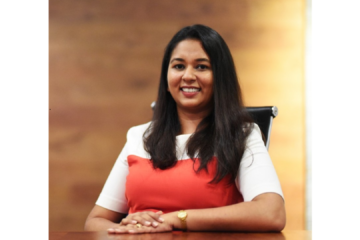
Trusting the Process and Staying Adaptable

Vidya Subramanian, Senior Marketing Specialist, AmiViz
Vidya Subramanian, Senior Marketing Specialist, AmiViz highlights the importance of adaptability, emotional intelligence, and the courage to think boldly in shaping meaningful business impact.
What has been the biggest professional leap of faith you’ve taken, and what did it teach you about resilience?
Moving from a healthcare background to cybersecurity in a completely new country has been the biggest leap of faith in my professional journey. At the same time, I was pursuing a two-year master’s degree while working full-time, determined to expand my opportunities and build a career in an entirely new industry.
I started from scratch as a marketing intern with no prior experience, and over time that journey evolved into managing regional marketing across multiple markets, collaborating with vendors, partners, and internal teams to deliver high-visibility campaigns.
Much of the learning happened in real time. I didn’t have decades of experience to rely on, so I had to stay curious, adapt quickly, and figure things out along the way and it’s a mindset I continue to carry forward.
What this experience ultimately taught me about resilience is the value of trusting the process, staying adaptable, and being willing to step into opportunities even before you feel completely ready.
Beyond the obvious challenges, do subtle structural barriers still exist for women in commercial technology roles?
Although I haven’t experienced them personally, subtle structural barriers do exist, industry- and gender-agnostic. Opportunities often emerge through informal networks, long-standing relationships, or visibility in high-impact projects. If high-potential individuals are not consistently present in those circles, it can unintentionally limit access to strategic opportunities or leadership pathways. Exposure, therefore, becomes crucial.
Also, performance alone doesn’t always translate into recognition. In many organizations, visibility in decision-making spaces matters just as much as capability, which is why it’s important to consistently build your personal brand and make your contributions visible. Impact must be visible, not just delivered!
Another subtle barrier can be the difference between mentorship and active advocacy. While many professionals receive guidance, career acceleration often happens when senior leaders actively advocate for individuals in strategic discussions and leadership opportunities. Equitable access to high-impact opportunities is more likely to build stronger and more diverse leadership teams.
However, the encouraging shift today is that more organizations are recognizing these dynamics and becoming more intentional about creating positive and inclusive environments.
What strengths do you believe are particularly important for women to succeed in technology sales and marketing leadership?
Although for centuries women have had to multitask and develop resilience, it has now somehow become a badge of honor for many. Hustling is something women have learned to do well – whether it comes naturally or has been imbibed through years of conditioning. In today’s professional landscape, women can recognize these traits as strengths and use them to their advantage. The ability to manage multiple priorities, stay resilient under pressure, and keep moving forward despite challenges can be a real asset in demanding roles like technology sales and marketing leadership.
As such, women naturally demonstrate high emotional intelligence and the ability to manage interpersonal dynamics effortlessly. When leveraged well, this becomes a significant advantage in understanding people, building trust with stakeholders, and navigating diverse teams and markets.
Ultimately, success comes from combining subject matter expertise, strong communication, and soft skills that are equally crucial to contribute meaningfully to conversations that shape business outcomes.
In high-value enterprise engagements, how critical is emotional intelligence alongside technical expertise?
Emotional intelligence is just as critical as technical expertise in managing work place engagements. While strong technical knowledge builds credibility, the ability to listen actively, read the room, manage expectations, and address concerns “thoughtfully” often determines how effectively an engagement progresses which is why EI becomes the differentiating factor.
How do you navigate setbacks or unexpected challenges in high-pressure commercial environments?
Being a mother to an almost five-year-old teaches you to expect the unexpected. It naturally builds the habit of always having a Plan B, which applies just as much in high-pressure commercial environments where things don’t always go according to plan.
Over time, I’ve learned to develop a solution-centric mindset rather than dwell on the problem itself – something I’ve strongly imbibed from my parents and mother-in-law. The ability to stay composed, assess the situation objectively, and quickly identify the next best alternative can be a real game changer when navigating setbacks at work.
Also, one should never underestimate the power of clear communication and the ability to seek guidance if necessary. Being transparent about challenges while working collaboratively toward solutions helps maintain trust and momentum.
Which lessons across your career have had the greatest impact on how you contribute to your organization today?
I think one of the biggest lessons I’ve learned is the importance of context. Understanding the broader business objective behind any initiative helps ensure that efforts are aligned with outcomes that truly matter to the organization. ‘What is it that you are doing this for? – that is the ultimate question that needs to be answered.’
To stay relevant and add value, it’s imperative to remain open and engage in continuous learning. Ofcourse, networking and building strong relationships can never go out of syllabus.
And finally, as one of my mentors once told me: if you are a marketer, you have to be audacious. Having the courage to think boldly and execute with conviction makes all the difference!
Hustling is something women have learned to do well – whether it comes naturally or has been imbibed through years of conditioning. In today’s professional landscape, women can recognize these traits as strengths and use them to their advantage



Leave a reply