
Redefining industrial AI with digital workers
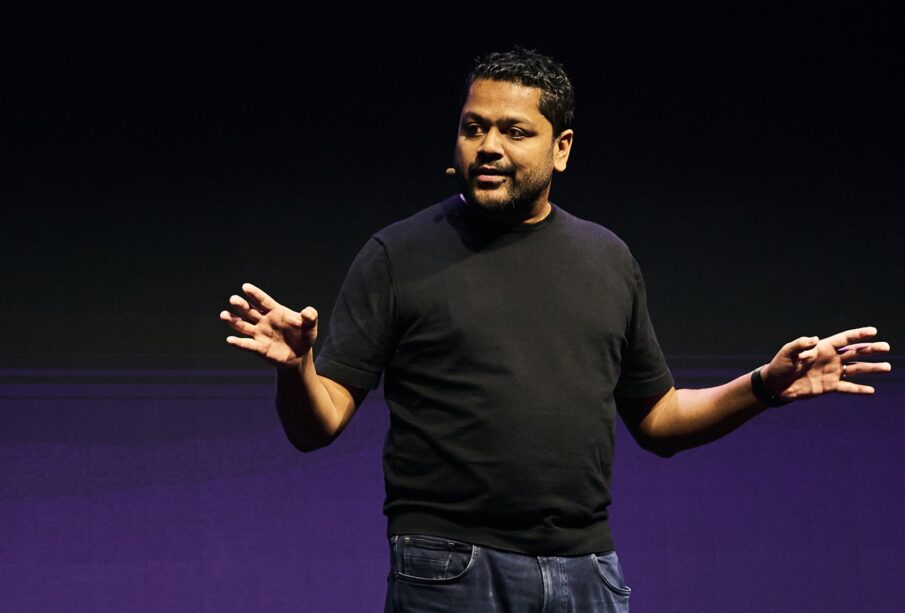
Vaibs Kumar, Senior Vice President of Technology at IFS
At the recently held IFS Industrial X Unleashed, Vaibs Kumar, Senior Vice President of Technology at IFS, spoke to CXO DX about how industrial AI, digital workers, and advanced automation are reshaping complex operations across global industries.
How do advancements like the digital workers augment operational teams, whether in the field, factory, office, or across supply chains?
Our core belief is that digital workers and the AI capabilities embedded in our software will enable businesses to achieve many times more than they can today. Our customers operate complex industrial environments, not simple, consumer-grade workflows, which is why we’ve spent decades building sophisticated software to support these demanding operations. With the introduction of digital workers, we’re creating autonomy throughout the system, allowing humans to interact with the software in a completely different way. Instead of manually filling forms or clicking through interfaces, they monitor how those tasks are executed by digital workers. This shift amplifies human potential by moving people from repetitive execution to higher-level responsibilities such as identifying issues, supervising performance, and coaching digital workers to improve outcomes.
Does that mean industrial AI won’t replace humans but rather work alongside them?
Absolutely. We do not believe humans disappear from the loop. Their responsibilities evolve, and they oversee agent activity, intervene where necessary, and coach digital workers to improve accuracy and outcomes. These hybrid human-AI roles, which barely exist today, will ultimately define the next generation of industrial operations.
You announced partnerships with Anthropic, Boston Dynamics, Siemens, and Microsoft. What value do these bring?
We have several strategic partnerships that strengthen our capabilities across different layers of industrial AI and automation. With Anthropic, we work deeply with Claude to power our GenAI capabilities. Our partnership with Boston Dynamics brings cutting-edge industrial robotics into the environments we serve, creating strong alignment between autonomous software and physical automation. With Siemens, our collaboration extends well beyond the GridX initiative; Siemens is integrating our scheduling and optimization capabilities directly into their own suite, positioning it for their global customer base. And then there’s Microsoft, a long-standing partner where, despite competing in some areas like Dynamics, the synergies are substantial. We are actively co-developing joint go-to-market strategies, and our teams are building integrations between our planning and scheduling optimization capabilities and Microsoft Dynamics.
Is your cloud strategy tied exclusively to Microsoft Azure?
While our primary focus is on Azure, we remain fully cloud-agnostic. Customers can run our software on our cloud service, on their own cloud environments, or entirely on-premises if required. The same software stack can operate anywhere, even in highly remote or constrained locations. We believe customers should always retain the choice of deployment model.
How has industrial AI changed your solution landscape compared to earlier generations?
The biggest change brought by industrial AI is the amplification of what businesses can achieve. Organizations can now extract deeper, more meaningful insights from their operations and execute processes at far greater scale than before. This means they can produce significantly more with the same resources and reduce downtime without increasing operational load. The impact goes beyond performance improvements as it also positively influences the livelihoods of the people involved by enabling safer, more efficient, and more productive ways of working.
You use several forms of AI and multiple LLMs. How do you orchestrate them? Do customers request specific models?
Not really. We haven’t seen customers insisting on particular LLMs, but we do use different models internally depending on the task. For example, Claude is excellent for code generation, so we rely on it for those workflows. OpenAI models are strong in reasoning, so we use them where that capability is needed. Gemini performs very well in vision tasks, so it’s the model of choice for that domain. Essentially, we use a range of LLMs under the hood, each selected for its strengths. Customers aren’t focused on which model we use; they care more about the value and outcomes. Our job is to package all of this technology into software that makes it easy for them to get started and see results quickly.
How do you determine which processes can be automated and where humans should stay involved?
Every digital worker is implemented differently because no two customers operate in the same way. Each organization adapts the digital worker to its own processes, deciding where humans should remain in the loop based on factors such as risk tolerance and the criticality of specific workflows. From a product standpoint, and leveraging our deep domain expertise, we know that certain processes, like triage, can be fully autonomous. However, when working with individual customers, we often see unique constraints; for example, a customer may choose to keep specialists involved for several months until they build confidence in the digital worker’s accuracy. Over time, as the system learns and trust increases, the human involvement is gradually reduced.
Many industries still rely on legacy infrastructure. How do you approach modernization cycles in such environments?
At the end of the day, it comes back to applying first-principles thinking. Many industrial machines from the 1950s or 1960s don’t generate telemetry data that modern systems can tap into, so the starting point is often adding simple, low-cost sensors that sense vibration, heat, pressure and today cost as little as a dollar. Once these sensors are installed, our Operational Intelligence software can collect and stream that data to the cloud, enabling organizations to begin generating insights and taking action. Every customer, however, sits at a different level of digital maturity, which means our responsibility is to adapt both the software and its implementation to meet them where they are. While we design for the most advanced environments, we remain fully aware that customers progress through this lifecycle at different speeds.
Which regions are seeing the strongest growth for IFS?
Northwest Europe, Scandinavia, the UK, France, the Middle East, and Japan are major markets for us. While modern regions like the Gulf have newer infrastructure, many organisations, even in the Middle East, still contend with legacy systems, especially in sectors such as utilities and energy. Growth opportunities therefore exist across all regions, each at a different stage of maturity.
What are your priority industry verticals today?
Our core verticals include energy and utilities, manufacturing, construction and engineering, shipbuilding, transport, telecommunications, and aerospace. Within these industries, our strongest focus areas are manufacturing operations, asset management, and field service operations. These three domains underpin the majority of industrial workflows we support.
As digital workers take on more execution, how does this affect trust, especially for end consumers?
End consumers ultimately care about service quality, reliability, and cost. They are not concerned with whether a digital worker performed the task. For our customers, however, trust is critical. We offer preventive mechanisms that allow them to involve humans in the loop at key points, and detective controls that allow full visibility into the actions taken by digital workers. This level of transparency helps organisations build confidence in autonomous operations.
How do you support customers with training, upskilling, and change management as they adopt AI-driven workflows?
Our implementation and customer success teams play a central role. Customer success in an AI-first world requires new types of expertise, and we are dedicated to building those capabilities. Guiding organisations through behavioural change, process redesign, and workforce enablement is now as important as deploying the technology itself.
How does the Loops acquisition strengthen your agentic AI capabilities?
Loops allows us to own the agentic AI layer rather than relying on external providers. It powers digital workers inside IFS Cloud but can also sit on top of other business systems, giving customers a high degree of flexibility. This composability means organisations can adopt digital workers without needing to overhaul their entire software estate.
Can your components operate independently of the full IFS suite?
Yes. Our technology is fully composable. Customers can use our scheduling optimisation capability on its own, integrate our workforce management capabilities into their existing systems, or deploy digital workers independently through Loops. They adopt what they need without committing to the entire stack.
How do you balance cloud and on-prem deployment requirements?
We encourage customers to use our cloud service, but they retain full deployment choice. The same software can run on-prem, in hybrid environments, in sovereign clouds, or in their own private cloud environments. Flexibility is a fundamental part of our design philosophy.
How do you train AI models while ensuring compliance with regulations such as GDPR?
We train AI models specifically on a customer’s own data and deliver those models exclusively to that customer. This ensures privacy and compliance, while also creating solutions that are highly tailored to the organisation’s operations. When customers run on IFS Cloud, their data is already within a secure environment, making this training process seamless.
Looking ahead, what do the next two to three years look like for IFS?
Digital workers will become widespread within the next year. Beyond that, the next frontier is physical AI with digital workers operating in tandem with robotics. This convergence will unlock an entirely new level of industrial efficiency and will reshape how factories, utilities, and infrastructure organisations operate.


Leave a reply