
Confidence built on consistency
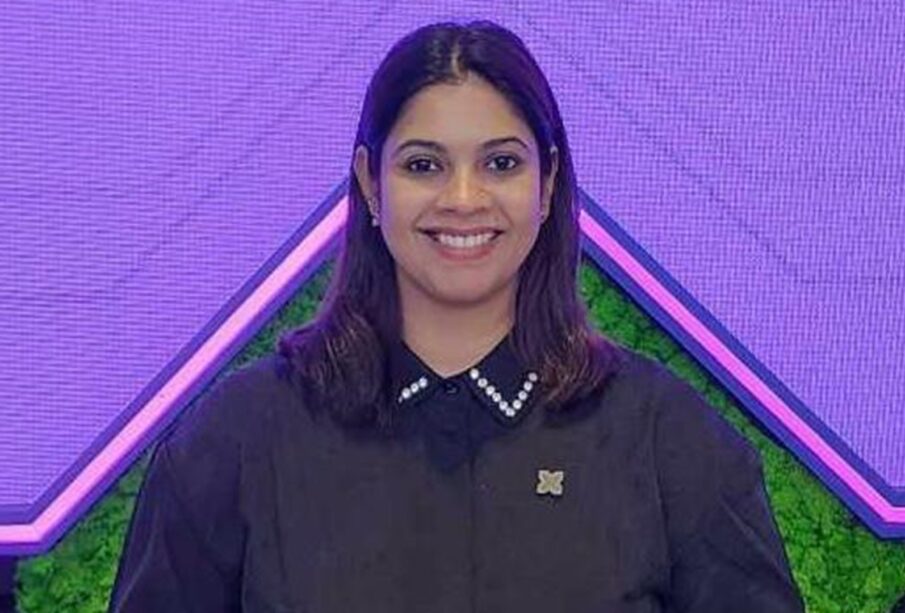
Shradha Subramaniyan, Route to Market Manager, Nutanix
Shradha Subramaniyan, Route to Market Manager, Nutanix shares how confidence in one’s work, strong mentorship, and the ability to translate complex technologies like AI into real business value have shaped her leadership approach.
What initially drew you to a career in the technology industry? Has that early motivation sustained over the years?
My entry into the tech industry was actually a natural evolution of my marketing background. After moving to Dubai, I began working at an advertising firm where I managed several high-profile technology accounts. I became fascinated by the tangible ways tech was reshaping our daily lives, and I eventually landed a breakthrough role with Aptec, an Ingram Micro company.
Since starting that journey in 2013, my motivation hasn’t just sustained, it has grown. Over the past 13 years, I’ve realized that because technology evolves so rapidly, the landscape is never static. There is always something new to learn and a fresh challenge to solve, which keeps the work as exciting today as it was on day one.
Looking back, what defining moments shaped your leadership approach in sales and marketing?
In my experience, the only true constant is evolution. Rather than one singular defining moment, my leadership style has been shaped by a continuous journey of learning and adaptation. However, if I were to pinpoint the pillars that define my approach today, two things stand out:
First is the realization that true confidence comes from trusting your own work rather than seeking external validation. In the fast-paced world of tech sales and marketing, it’s easy to get caught up in immediate praise or optics. By staying anchored in the quality of my output and my own professional integrity, I’ve been able to lead with more consistency and focus.
Second is the importance of a strong support system. I’ve been incredibly fortunate to have a foundation built by my family – my mom, my husband, and my sisters as well as brilliant mentors who have guided me throughout my career. This has taught me that leadership isn’t a solo act; it’s about building an environment where others feel supported, mentored, and empowered to grow, just as I was.
As the industry has shifted from legacy systems to cloud and AI-driven models, how have you evolved your own role to stay ahead?
I view AI not merely as industry terminology, but as the foundational architecture of the future. It is fundamentally redefining the marketing landscape, moving us from reactive strategies to predictive, hyper-personalized engagement.
In my role, I’ve recognized that while AI is now a universal customer requirement, the challenge lies in the ‘how.’ My responsibility and my strategy for staying ahead is to act as a translator between technical capability and business necessity.
I aim to help customers navigate the noise to identify their specific pain points, ensuring that we aren’t just deploying AI for its own sake, but using it to optimize their unique workflows. For me, staying ahead means maintaining a deep, hands-on understanding of how these models can drive tangible ROI, ensuring that technology always serves as a catalyst for the business, rather than a complication.
Beyond the obvious challenges, do subtle structural barriers still exist for women in commercial technology roles?
The most persistent barrier for women in commercial technology isn’t a lack of talent or guidance; it is the gap between mentorship and sponsorship. While women are often ‘over-mentored’ receiving an abundance of advice on how to grow, we are frequently ‘under-sponsored.’
In the high-stakes world of tech distribution, breaking into the ‘inner circle’ requires more than just professional excellence. It requires a sponsor: someone with a seat at the table who will advocate for your capability when you aren’t in the room.
Navigating this becomes even more complex when balancing a personal life and a career. For many women, these subtle barriers the informal networks and the lack of active advocacy remain a significant challenge. My approach is to bridge this gap by being an active sponsor myself. I believe leadership in this industry means moving beyond just giving advice and instead creating the structural openings that allow women to lead, thrive, and stay ahead of the evolution.
I view AI not merely as industry terminology, but as the foundational architecture of the future. It is fundamentally redefining the marketing landscape, moving us from reactive strategies to predictive, hyper-personalized engagement.


Leave a reply