
A hands-on approach to building markets
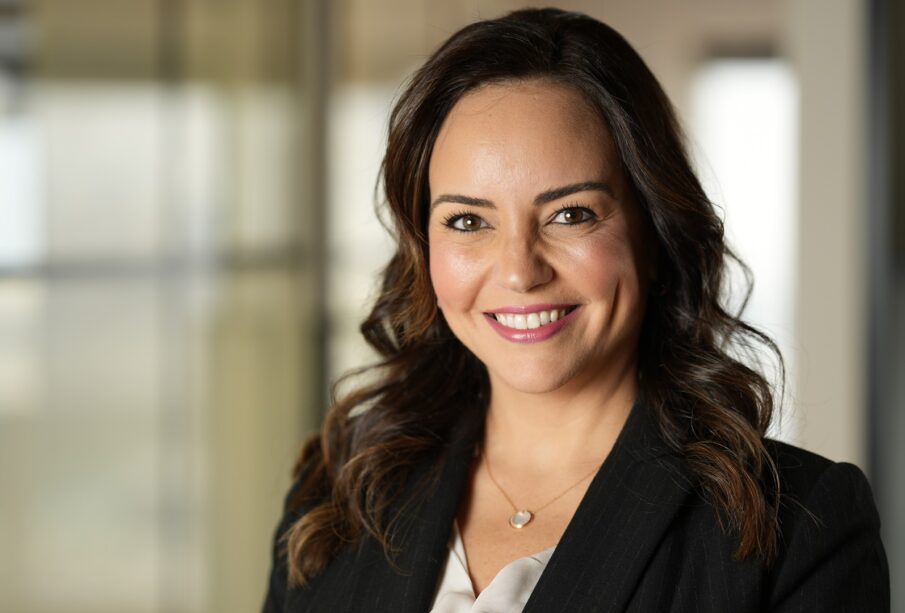
Meriam ElOuazzani, Vice President for Middle East, Turkey, and Africa, Censys
Meriam ElOuazzani, Vice President for Middle East, Turkey, and Africa, Censys discusses the leadership decisions that shaped her journey and why cybersecurity must now be positioned as a business enabler rather than a cost center.
What initially drew you to a career in the technology industry? Has that early motivation sustained over the years?
I grew up in Morocco watching the region go through wave after wave of digital investment, but the security conversation was always an afterthought. That gap between ambition and readiness is what pulled me in. I started at HP, moved to Cisco, and spent the next decade in the Middle East, Turkey, and Africa building cybersecurity markets where progress had started.
What sustained me was not the technology itself. It was the translation work. Sitting with a CPO in the United Arab Emirates or a CIO in South Africa and helping them see that cybersecurity is not a cost center but a condition for everything else they want to build. That conversation has never gotten old. The tools changed. The urgency changed. But the core of it, making technical complexity legible to the people who make investment decisions, has been my work from the beginning. I’m proud that I get to do it today again with a great platform in hand, Censys, and an amazing team to support our customers in building stronger security practices.
Looking back, what defining moments shaped your leadership approach in sales and marketing?
Two moments stand out. The first was at Cisco, leading mobility sales across the Middle East during the period when the industry was still selling hardware appliances through traditional channel partners. I learned that you do not build a market by pushing the product. You build it by making your partners successful first. A partner that drives value and supports customers with technology and adoption is key. That lesson has shaped every go-to-market strategy I have built since.
The second was at VMware, where I built the META NSX practices from scratch. There was no team, no pipeline, no playbook. I had to recruit, establish channel relationships, and close enterprise deals simultaneously. I had talented extended team members who went the extra mile to support the practice and true leaders around me to help transform the vision into reality. The power of one team, a team that doesn’t stop at job descriptions and believes in the value that transformation and out-of-the-box ideas and initiatives bring. That experience taught me something you cannot learn in a structured environment: when you are building from zero, every decision compounds. You learn to trust your judgment faster because there is no one else’s judgment to borrow. You also get to know the value of having the right people beside you supporting you every step of the way. Now at Censys, I’m learning from strong and smart people who learned a lot and stayed humble, lessons I encourage everyone to learn and apply.
As the industry has shifted from legacy systems to cloud and AI-driven models, how have you evolved your own role to stay ahead?
I have lived through many major inflection points in this industry. At Cisco, we sold firewalls and intrusion prevention systems as physical appliances. At VMware, the data center was being abstracted into software, and security had to follow workloads instead of sitting at the network edge. At SentinelOne, I watched AI-native platforms replace signature-based detection entirely. Now at Censys, the question is even more foundational: before you can secure anything, you need to know what you have exposed on the Internet. While you think you have the best technologies in your sock, remember that there is always a way to enrich alerts, expand indicators, and monitor attackers’ footprints, and that is our strength at Censys, and this is what I chose to invest in to help customers with the best technologies they can rely on.
Each of those transitions required me to unlearn something I was good at. The hardest was accepting that the channel-driven, appliance-based sales model I had mastered at Cisco was becoming obsolete. A new world around SaaS-based cybersecurity was opening to me. The META cybersecurity market is projected to reach $6.5 billion by 2031. Organizations across the region are demanding real-time visibility into their digital footprint. The leaders who do well in this next phase will be the ones willing to let go of what made them successful in the last one.
What has been the biggest professional leap of faith you’ve taken, and what did it teach you about resilience?
Joining Censys. After three years of building, leading, and growing. I made the decision to step into something new. Walking away from something you built is harder than walking toward something new.
I took the role because Censys is solving a problem I have watched organizations struggle with for two decades: they do not know what their own infrastructure looks like from the outside. At Censys, what we offer is a clear view of what your attack surface looks like, the same view an attacker already has. That matters more now than ever, with the region’s rapid digitization under Vision 2030 and the UAE’s smart city initiatives creating new exposure every day. What makes this move especially meaningful is the company itself. Censys has a clear vision, a disciplined path to execution, and a solution portfolio that continues to expand. When your foundation is accurate and reliable data that security teams can build on with confidence, sustained growth becomes inevitable.
What this move taught me about resilience is simple. Resilience is not about enduring discomfort. It is about choosing discomfort deliberately when you believe the work matters.
Beyond the obvious challenges, do subtle structural barriers still exist for women in commercial technology roles?
No one in this industry is surprised by the imbalance. That is precisely the problem. It has become expected rather than unacceptable. I have spent twenty years walking into rooms where I was the only woman at the table. Boardrooms, government sessions, high-stakes negotiations. The pattern has barely shifted.
Women remain vastly underrepresented in cybersecurity leadership, both globally and across the GCC. Yet women in this field are consistently more educated than their male counterparts. The gap is not in preparation. It is in the architecture of progression: who gets sponsored, who gets seen, and who gets chosen when it matters.
The single most damaging barrier I have witnessed in this region is the absence of structured sponsorship. Nearly half of women in the Middle East report having no mentor or sponsor in their workplace. Competence without visibility leads nowhere. That is not an individual failing. It is a systemic one.
Which lessons across your career have had the greatest impact on how you contribute to your organization today?
Three lessons. The first is that understanding regional market dynamics matters more than any global playbook. My experience across META has given me a deep understanding of how different this market is from North America or Europe. The buyer journey, the role of government mandates, and the channel structures are all different. You cannot copy-paste a go-to-market strategy from San Francisco to Riyadh.
The second is that security should be framed as a business enabler, not a barrier. The moment you position cybersecurity as something that slows innovation down, you have lost the conversation with the C-suite. I have found that the most effective framing is simple: this is what lets you move fast without breaking things.
The third is that your channel partners are your business. I learned this at Cisco, and it has held true at every company since. You scale through strong, on-the-ground partnerships. Full stop.
You learn to trust your judgment faster because there is no one else’s judgment to borrow. You also get to know the value of having the right people beside you supporting you every step of the way.


Leave a reply