

Rethinking the collaboration experience
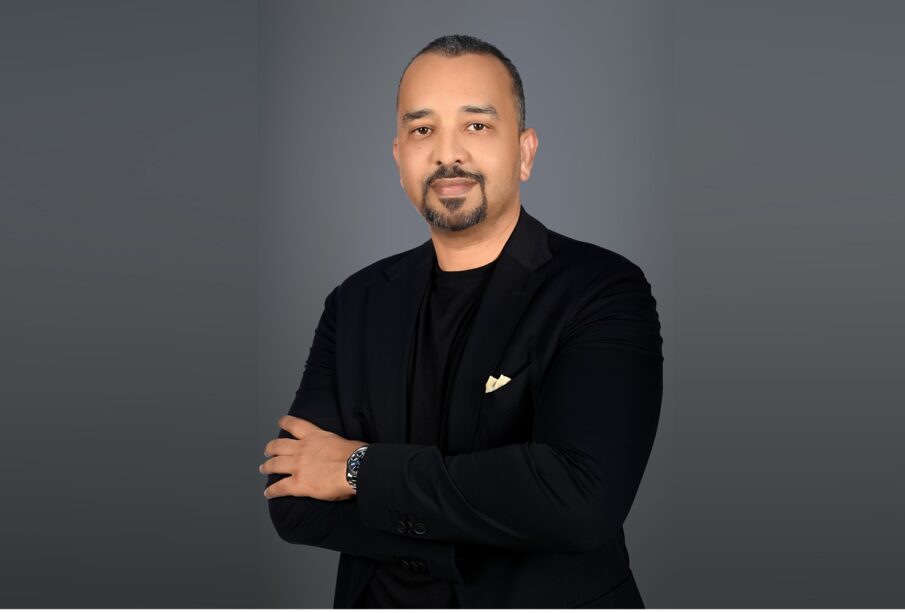
Murad Ali, Head of Middle East & Central Asia, Logitech for Business
Speaking to CXO DX a day ahead of Logitech’s global product launch at the Grand Egyptian Museum in Cairo on October 8, 2026, Murad Ali, Head of GCC, Logitech for Business, discussed the company’s evolution in enterprise collaboration, its growing focus on AI-powered solutions, the significance of its next-generation portfolio, and the Middle East’s importance as a strategic growth market.
Enterprise collaboration has undergone a significant transformation in recent years, particularly since the pandemic, with cloud platforms, hybrid work and evolving user expectations reshaping the landscape. How has Logitech adapted its strategy to these changes, and what has driven its evolution as a collaboration solutions provider?
COVID completely reshaped the technology landscape. It created the concept of hybrid work and accelerated the adoption of collaboration solutions. Users have become smarter and more demanding when it comes to technology. They no longer accept technology that offers an experience inferior to what they have on their smartphones.
The rise of cloud platforms such as Microsoft Teams, Zoom, and Google Meet was a game changer during COVID. These platforms became the centre of attention for most organisations when it came to investments in collaboration.
Logitech was ready at that time. We already had the concept of video bars, easy integration, seamless cloud support, USB plug-and-play capabilities and native integration with most of the cloud players. This gave us a significant edge during that transformation. We took advantage of that readiness and continued developing our products to where we are today. Now we have another game changer, which is AI, and that is driving our next phase of innovation.
At Logitech, software is at the heart of what we do, while the consumer and end-user experience is in our DNA. These elements complement each other and contribute to our expertise in video conferencing. Today, I can say that we are the market leader in the Middle East.
You mentioned that Logitech is fundamentally a software company, although it is widely recognised for its hardware. Could you elaborate on that?
Absolutely. Many people may not know what Logitech stands for. If you break the word into two, “Logi” and “Tech”, the way we describe it is that “Logi” represents the software heart of the company, while “Tech” represents technology. We bring them together. We are a Swiss company based in Lausanne, and design has always been a major part of our identity.
We have unique products and iconic designs, such as our MX mice and keyboards, as well as our video bars. But beyond the hardware design, there is a great deal of innovation happening in the software and the technology that powers these products. That is why I say we understand technology not only from the perspective of design and hardware, but also from the software side. At our heart, we are a software-driven company.
AI is becoming increasingly central to enterprise technology. How deeply is Logitech integrating AI into its collaboration solutions and product design?
The question comes at the right time because we are about to announce one of the biggest product launches in Logitech’s 45-year history: our second generation smart video collaboration devices.
These products are powered by AI. And when I say AI, I don’t mean only the intelligence of the camera or the quality of the audio. We are now talking about analytics, data, actions after meetings, productivity during and after meetings, and ROI justification.
Today, organisations are talking about investments in AI, and countries are investing in infrastructure readiness for AI. We are taking this very seriously and placing it at the centre of our engineering and product design.
Our new generation of products is designed around AI, collaboration, productivity, user interfaces and accessibility. On top of all that, we are also focusing on environmental friendliness.
(Visit this link for the Logitech launch news – https://cxodx.com/34594-2/)
Logitech has strategic partnerships with major technology players such as Microsoft, Zoom, Google and Barco. How important are these alliances in delivering a complete collaboration experience?
At Logitech, we believe we win together. We have very strong alliances, and we work closely with our partners. Microsoft, Zoom and Google Meet are among the biggest players today in the cloud collaboration space, and increasingly in AI as well. We work closely with them not only to reshape the user experience but also in product design, accessibility and native solution integration.
You can make a product that is easy to use but difficult to integrate. We want to make sure our products are not only easy to use but also easy to integrate. That is a very important part of our approach. We want users to have a seamless experience, regardless of the collaboration platform they are using.
How has the Middle East responded to Logitech’s evolution as a collaboration solutions provider, particularly against the backdrop of major digital transformation initiatives?
There has definitely been a major transformation in the region. Take the UAE, for example. The country is advancing rapidly in terms of AI infrastructure, intelligent applications and paperless government processes. Similarly, Saudi Vision 2030 is driving significant investments in digitalisation and AI.
We are seeing major investments across the Middle East in AI infrastructure readiness, digital transformation and security. We are taking these developments very seriously because our products are evolving at the same pace as the growth of these markets.
This creates a significant opportunity for Logitech. As organisations become more digitally advanced, their expectations of collaboration technology also increase, and we are positioning our solutions to meet those expectations.
Logitech now offers solutions ranging from individual workspaces to large meeting rooms and auditoriums. How has the demand evolved across these different segments?
When we started, particularly around the time of COVID, our focus was largely at the user level, supporting one-to-one meetings. We then expanded into meeting rooms, which we call teamwork stations. Now, we have entered the large-room segment, including auditoriums and groups of meeting rooms, with solutions such as our new Rally AI Camera Pro.
Today, Logitech covers all room sizes, different types of users and different working environments. Whether you are a remote worker, working from the office, working from home or a road warrior, we have devices and solutions designed to give you the same quality of experience.
The experience should not be inferior simply because you are away from your office or desk. We also make sure that our solutions integrate seamlessly with the major cloud platforms and remain easy to use and connected to the user’s working environment.
The RISE event in Cairo coincides with Logitech’s 45th anniversary and a major product launch. What is the broader significance of this event for Logitech and its partners?
RISE is an event we organise every year. It is an opportunity for us to celebrate, engage with our partners, thank them for their trust and share insights, ideas and roadmaps.
This year, we chose Cairo for two reasons. First, we are celebrating 45 years of Logitech. Second, we wanted an iconic location for an iconic launch.
The Grand Egyptian Museum is a very special place, and it provides the right setting for one of the biggest launches in the history of Logitech’s B2B business, our Gen2 portfolio.
This is a worldwide launch. While we unveil the products at the museum, our counterparts in the US, Canada and other markets will be revealing the products simultaneously to partners and end customers.
So, it is a major global moment for Logitech, and we are bringing that moment to Cairo.
During your keynote at RISE, what were the key messages you wanted to convey to Logitech’s partners and customers?
My message was primarily about thanking our partners for their trust, hard work and the achievements we have made together in 2025. We also wanted to assure them that there is much more to come. We introduced our extended team because we are growing and investing in resources, not only in the Middle East but also in Africa.
We are expanding our capabilities and strengthening our presence to be closer to our partners and customers. We also celebrated customer success stories. We had three of our leading customers in the region sharing their experiences and achievements. Beyond the business discussions, RISE is also about networking, building relationships and creating memories together with our partners and end users.
Another important message was our renewed commitment to sustainability. We are focused on producing long-lasting products and using more environmentally friendly materials.
So, the event brings together several important themes: partnerships, innovation, growth, customer success and sustainability.
How important is the Middle East to Logitech’s global business, and where do you see the biggest growth opportunities?
The Middle East is one of the fastest-growing markets for us. We are seeing growth not only in the market itself but also in the investments that governments and organisations are making in technology infrastructure. That represents a major opportunity for Logitech.
Collaboration technology and video conferencing devices are no longer nice-to-have solutions. They have become must-have tools for everyday work. This mindset has changed significantly across the Middle East over the past ten years. We are continuing to invest in people, resources and capabilities to be closer to the market because we see enormous opportunities.
When you look at population growth, GDP, digital transformation initiatives and infrastructure investments, the potential is substantial. That is why the Middle East remains such an important market for Logitech, and why we are continuing to strengthen our presence here.
Looking back at the early days of enterprise telepresence, when organisations invested heavily in dedicated conferencing rooms, how fundamentally has the market changed, and how has Logitech capitalised on that shift?
The market has changed completely. At time, organisations were willing to spend half a million dollars on a single meeting room.
Nobody wants to invest that much in a meeting room today. The rise of cloud platforms after COVID completely changed the market. Software became the dominant factor rather than hardware.
Zoom, Microsoft Teams, video bar solutions and even the quality of today’s smartphones have transformed expectations.
Think about it. If someone already has a smartphone that can deliver a high-quality video call, why would they want to invest hundreds of thousands of dollars in a dedicated conferencing room?
In the old days, installing a telepresence solution could take a month. You needed cabling, ceiling work, flooring and significant integration. During COVID, nobody was asking for that kind of installation. People were asking for a camera that they could simply plug in and use with Zoom. And Logitech was ready.
Our solutions were already USB-ready, cloud-ready, plug-and-play and easy to use. They did not require complicated integration. It was almost as if we had anticipated the future. That readiness helped Logitech grow massively after COVID.
We also benefited from our strong consumer brand. At the end of the day, an enterprise user is also a consumer. People are already familiar with Logitech through our iconic consumer products, and that familiarity creates trust.
The combination of brand recognition, software capabilities, ease of use and cloud readiness put us in a very strong position when the market changed.
COVID changed the entire face of collaboration technology. In many ways, it changed not only technology but also how people work and interact. And Logitech was well positioned to take advantage of that transformation.



Leave a reply