
Focusing on value creation

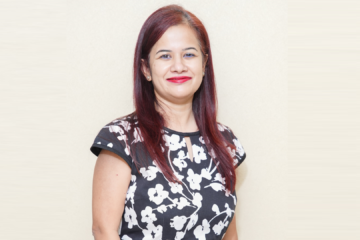
Haneen Abu Ouda, Marketing & Communication Specialist at GBM says Technology is not only about innovation but about the impact it creates.
What initially drew you to a career in the technology industry? Has that early motivation sustained over the years?
What initially drew me to the technology industry was witnessing its transformative power. I still remember attending my first GITEX — seeing global technology leaders shaping the future in one space made me realize that this industry is not just evolving; it is defining how we live and do business.
That experience shifted something in me. I didn’t just want to observe innovation — I wanted to contribute to it. That motivation has absolutely sustained over the years. If anything, the pace of change in technology has strengthened my curiosity and commitment to continuous growth.
Looking back, what defining moments shaped your leadership approach in sales and marketing?
One defining moment was working closely with sales teams in high-pressure environments. I learned that alignment between marketing and sales is not optional — it’s essential. Today, I lead with collaboration, accountability, and clarity of purpose.
As the industry has shifted from legacy systems to cloud and AI-driven models, how have you evolved your own role to stay ahead?
Technology evolves rapidly, and I’ve learned that adaptability is not a choice — it’s a professional discipline. As the industry shifted toward cloud and AI-driven solutions, I invested time in understanding not just the products, but the business outcomes they enable.
I moved from focusing purely on campaigns to positioning value propositions around transformation, efficiency, and ROI. Staying ahead means staying curious, continuously learning, and aligning marketing strategy with where the industry is heading — not where it has been.
What has been the biggest professional leap of faith you’ve taken, and what did it teach you about resilience?
The biggest leap of faith I took was resigning from a role where I felt misaligned with my long-term goals. Marketing is where I knew I could create the most impact.
Leaving stability without immediate certainty was challenging, but it taught me that clarity of direction builds resilience. That experience reinforced my belief that sometimes growth requires discomfort — and trusting your long-term vision over short-term security.
Beyond the obvious challenges, do subtle structural barriers still exist for women in commercial technology roles?
Yes, subtle barriers still exist — not always in policy, but sometimes in perception. Women in commercial technology roles may have to work slightly harder to establish authority in traditionally male-dominated spaces.
However, I’ve also seen the industry evolve significantly. Organizations are increasingly recognizing that diversity drives performance. The key is not just representation, but inclusion — ensuring women are present in decision-making roles, not only supportive ones.
Which lessons across your career have had the greatest impact on how you contribute to your organization today?
The greatest lesson has been the power of ownership. When you treat your role as a business within the business, your mindset shifts from task execution to value creation.
I’ve also learned that productivity isn’t about being busy — it’s about being intentional. Today, I focus on strategic priorities, measurable outcomes, and aligning my work directly with commercial impact.
What strengths do you believe are particularly important for women to succeed in technology sales and marketing leadership?
Confidence, strategic thinking, and continuous learning are essential. While technology sales has traditionally been male-dominated, leadership today is less about dominance and more about influence.
Women often bring strong emotional intelligence, resilience, and collaborative leadership styles — which are powerful assets in complex enterprise environments. Being assertive while staying authentic is key.
In high-value enterprise engagements, how critical is emotional intelligence alongside technical expertise?
Technical expertise builds credibility, but emotional intelligence builds trust — and trust closes deals.
Enterprise engagements are complex, involving multiple stakeholders, competing priorities, and long decision cycles. Understanding motivations, reading dynamics, and navigating conversations strategically is critical.
At the end of the day, behind every corporate structure are people. And business remains fundamentally human.
Women often bring strong emotional intelligence, resilience, and collaborative leadership styles — which are powerful assets in complex enterprise environments. Being assertive while staying authentic is key.


Leave a reply