
Enabling People-Centric Leadership
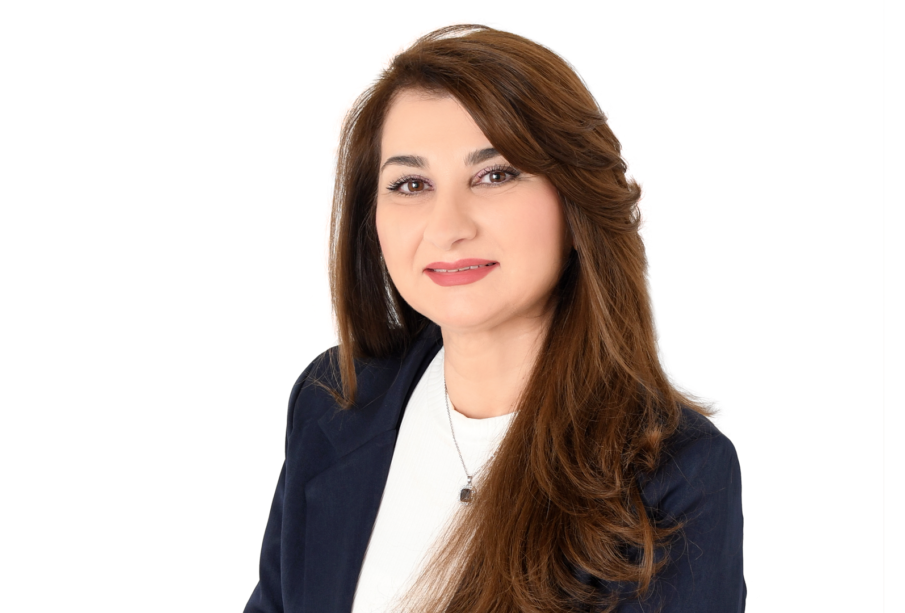
Lama Sheikh, CAO & Director Finesse
Lama Sheikh, CAO & Director Finesse discusses leadership through uncertainty, the importance of structured, people-centric environments, and why resilience and clarity are essential in today’s fast-changing technology landscape.
What initially drew you to a career in the technology industry?
I have always been motivated by a deep desire to empower people and enable meaningful change. Supporting someone in a way that helps them feel hopeful and capable is deeply fulfilling for me. I see technology as one of the most powerful tools to do exactly that—it creates meaningful experiences, improves how we live and work, and enables lasting progress at scale.
This naturally shaped how I viewed technology from a young age. Growing up, I was fascinated by how it could make the seemingly impossible achievable and transform the way organizations function. That early curiosity eventually guided me into this field. What began as interest quickly grew into a passion as I witnessed the real impact of technology on businesses and communities.
What attracted me to technology was its power to shape the future. It’s one of the few industries where ideas can quickly turn into solutions that transform how businesses and people operate. That sense of impact has kept me motivated throughout my career.
Over time, my focus has been on building structured, people-centric environments where innovation can thrive and organizations can grow sustainably. For me, technology isn’t just about systems or platforms, it’s about creating the right foundations so people, ideas, and businesses can reach their full potential.
Beyond the obvious challenges, do subtle structural barriers still exist for women in commercial technology roles?
Absolutely. While the most overt barriers may have fallen, it would be unrealistic to overlook the subtle yet persistent structural headwinds women still face. The conversation has thankfully shifted from why diversity matters to how we embed it into our organizational DNA. Diversity is no longer a ‘nice-to-have’; it is a strategic imperative. Diverse teams consistently outperform homogenous ones because they dismantle echo chambers, challenge assumptions, and build products that resonate with a broader world.
Historically, the industry’s pipeline and promotion pathways were not built with women in mind. The positive change we see now is a conscious effort by forward-thinking organizations to correct this—not just by listening, but by actively creating programs that accelerate career growth. My advice to women entering tech is to own their space unapologetically. Be visible, be vocal, and recognize that your unique perspective is a competitive advantage for the business. Frame every challenge as an opportunity to demonstrate that value. Your viewpoint is not just welcome; it is essential.
What has been the biggest professional leap of faith you’ve taken, and what did it teach you about resilience?
One of the biggest leaps of faith in my career has been joining Finesse in its early growth phase and committing to its long-term journey. Over the past decade, I’ve witnessed the organization evolve along with a rapidly changing technology landscape. It wasn’t a single dramatic decision, but a sustained commitment to grow with the company, taking on new responsibilities, scaling functions, and continuously adapting our operating model.
A particularly defining chapter was the COVID-19 pandemic. Overnight, organizations had to pivot to remote work, maintain service quality, and ensure robust data security. It was a stress test for every system, process, and person involved. My role was to absorb that pressure, maintaining a calm front to give the team the psychological safety needed to solve complex problems. That period reinforced that resilience is built over time; adaptability is non-negotiable; and calm, steady leadership is critical when uncertainty is at its peak. It also highlighted the importance of empathy, supporting people through personal and professional challenges while safeguarding business continuity.
Ultimately, that leap of faith taught me that resilience is not about avoiding difficulties, but about developing the mindset, structures, and relationships that allow you to respond constructively when they arise.
How do you navigate setbacks or unexpected challenges in high-pressure commercial environments?
My approach is guided by a leadership compass that points toward calm, clarity, and continuous improvement. When a challenge hits, the first directive is to trade panic for perspective. I deliberately create a moment of pause to separate the signal from the noise, gather objective facts, and avoid the trap of rushed, reactive decisions.
Once the landscape is clear, I focus on what I call ‘mission-critical triage’—identifying the absolute priorities for our clients, our people, and our operations. With that established, the focus shifts to communication. In a crisis, clarity is kindness. Transparent, consistent communication is the bedrock of trust, ensuring the team feels secure, informed, and aligned on the path forward.
However, a challenge isn’t truly over until we have harvested the wisdom from it. We conduct a reflective analysis to understand the root causes and embed the lessons learned into our processes. This transforms a reactive moment into a proactive strength, building our collective resilience. Ultimately, this is about modeling the kind of leadership I want to see. It proves that you can be both empathetic and decisive, and that true resilience isn’t about being unshakeable, but about how gracefully you lead through the shake-up.
If you could redesign how the technology industry develops its next generation of female leaders, what would you change?
If I were to redesign how the technology industry develops future female leaders, I would take a strategic, company-wide approach. This would involve clear leadership paths, development programs and opportunities to work on high-impact projects to build skills and experience. I would also create inclusive policies and measurable diversity goals to ensure women feel supported and confident stepping into leadership roles. This approach helps grow female leaders in a way that aligns with the organization’s long-term goals
When you look back on your career, what kind of legacy would you like to leave — professionally and personally?
When I look back on my career, I want to be remembered for strong leadership and meaningful relationships. I hope people see me as someone who built great teams, helped others grow, and delivered results that made a real difference. On a personal level, I want to be known as a leader who earned trust, encouraged collaboration, and supported people to reach their full potential, creating a culture where success is shared and lasting. I also hope my work inspires others to pursue their goals with confidence and resilience. Ultimately, I want to leave a legacy that encourages continuous learning, growth, and positive impact for everyone I work with
The conversation has thankfully shifted from why diversity matters to how we embed it into our organizational DNA. Diversity is no longer a ‘nice-to-have’; it is a strategic imperative.



Leave a reply