

Beyond the comfort zone
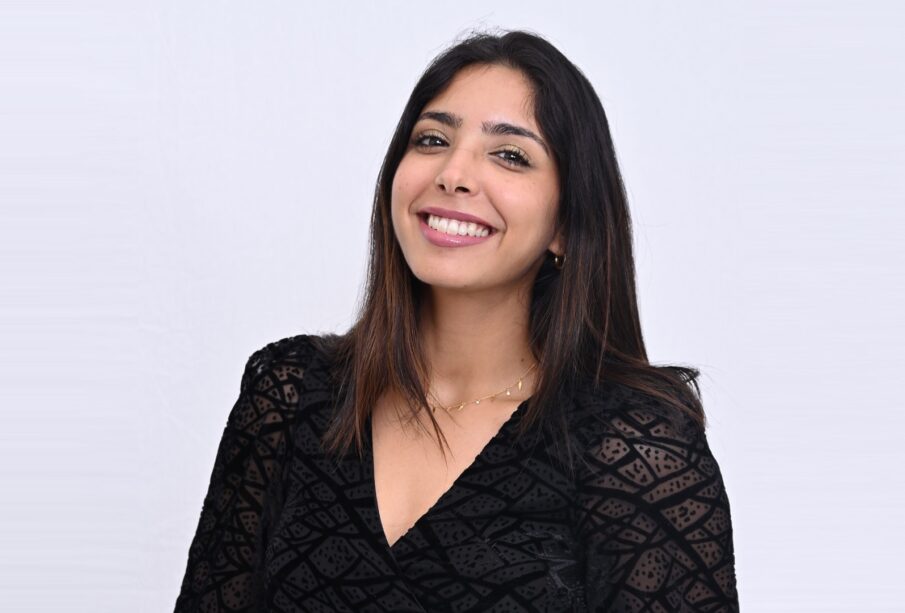
Amal Bouguerch, Marketing Manager, Ankabut
Amal Bouguerch, Marketing Manager, Ankabut shares how mentorship, hands-on engagement with technology, and a willingness to embrace uncertainty have shaped her leadership path.
What initially drew you to a career in the technology industry? Has that early motivation sustained over the years?
I have actually stumbled into the tech industry by a happy coincidence, and then it just made sense to stay in it. As time went by, that initial chance turned into genuine motivation when I realized this industry is perfectly suited for my personality and ambitions. Technology is fun, flexible, and refreshing. It moves at an incredible pace, which means you are quite literally never bored. The environment demands that you constantly evolve, and that dynamic suits me perfectly. I love being in tech!
Looking back, what defining moments shaped your leadership approach in sales and marketing?
Early on in my career, I was exposed to Global Leaders that were incredibly empowering, human, and hands-on, which naturally made me gravitate towards a blend of servant and situational leadership. But the true defining moments came from the women who guided me. My very first mentor took me under her wing like she would a daughter. She also recommended I lead key transformation projects at the time in our department and would guide me through them. Later, another incredible female leader who was our company’s site lead in North Africa and my direct manager believed in me enough to sponsor an expat assignment for me in our offices in Asia. That experience gave me massive exposure to the life-changing power of active sponsorship. It taught me that advocacy builds bridges the mind can only dream of. I decided then that I wanted to be that exact kind of empowering leader when I eventually managed my own team.
As the industry has shifted from legacy systems to cloud and AI-driven models, how have you evolved your own role to stay ahead?
You should never be shy about getting your hands dirty with technology. I place a massive emphasis on staying up to date, whether that means leveraging AI to curate my daily news, taking online training on the latest LLM updates, or personally figuring out the backend capabilities of a new EdTech platform before I even assign it to my team. Because of this hands on approach, my role has naturally evolved to focus heavily on AI driven use cases that genuinely improve our daily operations. AI is here to stay, and there is immense power to be harnessed if we treat it as the elevating, efficient tool it was originally built to be.
What has been the biggest professional leap of faith you’ve taken, and what did it teach you about resilience?
Without a doubt, it was moving to the Gulf, a foreign region with markets I knew very little about, while simultaneously stepping into a commercial role that was way outside my comfort zone with, what I then thought, limited technical skills. Suddenly, I was working with highly seasoned sales leaders and executives, some twice my age and more, who were looking to me for strategic advice, financial oversight, and major market decisions. I was absolutely petrified at first… but I decided to jump in anyway. I rationalized that the worst-case scenario was simply failing in this, then switching jobs to another more comfortable one; and the best-case scenario was that I would enjoy it, learn from it, and grow immensely. The choice was obvious, and I am happy to announce that I have not only lived to tell the tale but thrived and flourished throughout. This has taught me that taking a bold move and living in the discomfort zone beats living in regret and fear, hands down.
Beyond the obvious challenges, do subtle structural barriers still exist for women in commercial technology roles?
Sadly yes. Once you look past the obvious challenges like the wage gap or overt bias, the nuanced barriers become very clear. Having navigated the tech world in the Middle East, I see two distinct structural issues. The first is the “performance versus potential” double standard. Women are rarely given roles based on their potential – unlike their male counterparts; we usually only get the promotion after we have consistently over delivered on targets or flawlessly executed stellar campaigns for years. We call it a meritocracy, but it feels rather unfair.
The second barrier is what we’d call “upward credit-taking”. A woman will spend days working on a highly complex, strategic document, weighing every pro and con, polishing the framework, only to send it to a superior who presents it to leadership as their own. If you complain, you are flagged as “uncooperative”, “not a team player”. Women in tech are still constantly fighting to be trusted to present their own strategic work, in their own names, at the executive usually male dominated levels.
Which lessons across your career have had the greatest impact on how you contribute to your organization today?
The most impactful lessons have been entirely interpersonal. Very early on, I could see by being exposed to C-levels, that it was actually well perceived to treat my superiors, from my direct manager to the global CEO, as colleagues and human beings first, regardless of intimidating titles. We all deserve to be treated empathetically, and it is always better to speak to your manager with the same care you would use when advising a friend you trust. By consistently communicating from a place of facilitating business, you become known as a collaborative breath of fresh air, rather than someone who operates out of fear, hesitation, or corporate hypocrisy. Speaking my mind respectfully has opened countless doors for me. Most corporate barriers are completely self-imposed; if you let them, they will hold you captive of your own mind. Building relationships, while staying true to yourself, are the true key to your success.
What strengths do you believe are particularly important for women to succeed in technology sales and marketing leadership?
First, you have to believe in yourself and your capabilities, which sounds cliché, but it must be paired with the wisdom to know when to introspect. Believing in yourself doesn’t mean being blind to feedback or assuming you are always right. You must know how to trust your gut feeling while simultaneously questioning your own assumptions.
Second, you must aggressively upskill your knowledge, build a solid technical baseline. Become a subject matter expert in your field, not a “know-it-all” as no one will stand you, but so you can walk into any room with absolute confidence. When you know what you are talking about truly and precisely and not in vague terms, no one can step on you or gaslight you. Cover your baseline to build a strong foundation to your incredible Burj.
Lastly, I would say you have to put yourself out there. Start small. One encounter at a time, one small task at a time. If you are marked as “optional” for a face to face meeting with a key client or partner at their office you can take online, go anyway. If there is an important high visibility event but a long drive away, drive there still and mingle with people, talk about various topics. You truly never know where the opportunity lies, and by showing up repeatedly, something will manifest. Basic statistics.
In high-value enterprise engagements, how critical is emotional intelligence alongside technical expertise?
The media has repeated the “Emotional vs. Technical Expertise” debate for years, but I’d argue that the comparison itself is outdated. Today, technical expertise has a shelf life of about six months. The ultimate skill to develop is your Adaptability Quotient (AQ), which you might have heard of before. Working in this region means watching the tech landscape evolve at lightning speed. In just a few years, we’ve moved from laying down smart city infrastructure, to locking down cloud security, to experimenting with Generative AI, and now we are already shifting into the era of autonomous Agentic AI. Because the tech resets so quickly, your hard skills have a very short expiration date. The most critical career asset isn’t mastering whatever software is trending today – this is a baseline as explained in the previous question; it is having the emotional intelligence and adaptability to continuously unlearn and relearn without burning out. It would then become a second nature.
If you could redesign how the technology industry develops its next generation of female leaders, what would you change?
I would completely reframe mentorship programs. As they are currently structured, they often provide a dead end for women. Women in tech are already the most over-mentored and under-sponsored group in the industry. We don’t need another coffee chat about navigating office politics, we need tangible advocacy from senior leaders. Mentorship alone is never enough. I try to live by this with my own teams. My job is to step out of the spotlight, let them own the heavy lifting, and make sure the executive board knows exactly who deserves the credit.
Additionally, the industry pushes young women to master the technical secrets of the latest AI platforms. But AI is rapidly automating those hard skills. Prompting an algorithm is easy; making people actually care about the output requires massive emotional intelligence. I would focus entirely on developing women to be “Translators”. The next generation needs to be trained on how to humanize the tech. Your primary job as a commercial leader isn’t to just understand the code; it is to deeply understand the user’s anxiety around the code’s limitations, and solve for that calmly, preferably with a confident smile to boost everyone’s morale. Highly effective!
When you look back on your career, what kind of legacy would you like to leave — professionally and personally?
Great question. My first instinct is to say a legacy of uplifting and empowerment, both professionally and personally. I hope to leave a profound impact on the humans I have had the greatest pleasure to work or interact with. I want a legacy where you leave a piece of yourself within other people, no matter how small or seemingly insignificant, so that when they look back at your time together, they hopefully think fondly of you.
How do you navigate setbacks or unexpected challenges in high-pressure commercial environments?
Early in anyone’s career, it is incredibly hard to stay calm and stay the course when things go wrong. But as you gain expertise, you realize that every crisis is temporary. Our brains have a built-in what experts call “negativity bias”, meaning we are hardwired to think short term negatives will last forever and stay with them longer. We are magnets for negativity. Therefore, we have to actively fight that bias. My approach is to embrace the negative feelings, let them exist for a moment, and then pull myself together and keep moving. Dwelling on a setback never serves a positive purpose; it only generates more noise, which could set you back months, years and sometimes cost you your whole life.

Leave a reply