

From curiosity to impact in the digital era
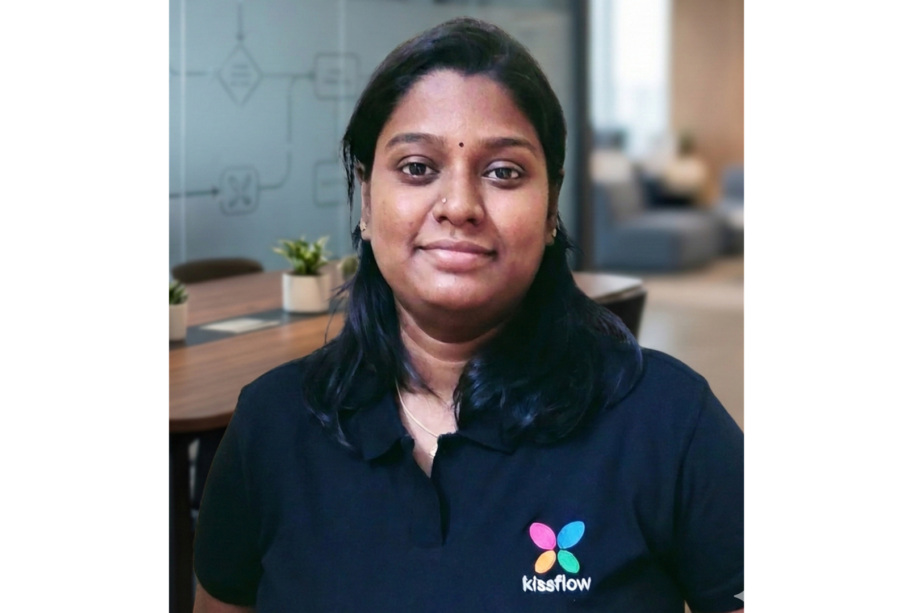
Aishwarya Ramesh, Senior Manager Marketing, Kissflow reflects on curiosity, ownership, and the mindset required to create meaningful impact in an evolving technology landscape.
What initially drew you to a career in the technology industry? Has that early motivation sustained over the years?
My entry into technology was fueled by a love for reading. Growing up, the Kindle was a revelation; the ability to access an entire library at my fingertips – rather than being limited by physical stock – showed me the democratization of information. I realized that the scale, reach, and variety I craved could only be delivered through digital technology. That sense of awe has never faded. It’s incredibly satisfying to witness global companies pivot, adapt to digital waves to gain business edge in competitive landscapes.
Looking back, what defining moments shaped your leadership approach in sales and marketing?
A key mentor once gave me the best advice I’ve received: “Be frugal with hiring, and once you have the right people, give them the autonomy to succeed.” That shifted my focus from trying to be the “hero” to becoming a facilitator. I’ve found that my leadership is most effective when I hire well, trust the team to play to their strengths, and provide a safety net for them to experiment and even fail. Watching them solve a problem after a stumble is more valuable to the team’s growth than any “hand-holding” I could have provided.
As the industry has shifted from legacy systems to cloud and AI-driven models, how have you evolved your own role to stay ahead?
Early in my career as a developer at TCS, I worked on the e-commerce engine for HPE. At the time, seeing a global titan prioritize a direct-to-consumer (D2C) model over traditional dealer networks was a lightbulb moment for me. It taught me that cloud adoption isn’t just an “IT upgrade” – it’s a fundamental business pivot. I learned early on to distinguish between “market noise” and “strategic shifts.”
Today, at Kissflow, I apply that same mindset. I have evolved from the tactical, manual days of hand-sending emails to prospects, to architecting sophisticated tech stacks that leverage data and AI to drive engagement.
My role now is to bridge the gap between technical infrastructure and buyer experience – ensuring we deliver the right message to the right person at the right time, at scale. I don’t just “keep up” with the digital wave; I look for the underlying business logic it enables, which is how I ensure our marketing technology actually moves the needle.
What has been the biggest professional leap of faith you’ve taken, and what did it teach you about resilience?
Leaving a stable corporate role at TCS to jump into an early-stage startup as a junior biz-dev was my biggest leap. That experience taught me that the “unknown” is actually where the best growth happens. It taught me persistence – specifically, how to learn the buyer’s language to build credibility in unfamiliar territory. I learned that if you remain curious and committed, you can arrive at stability regardless of how chaotic the business strategy or industry landscape becomes.
Beyond the obvious challenges, do subtle structural barriers still exist for women in commercial technology roles?
I believe that barriers exist as long as we allow the thought that “someone else” holds the keys to our growth. Whether you are a woman or in any other demographic, the moment you entertain the idea that your path to power is restricted by external forces, you’ve already limited yourself.
Which lessons across your career have had the greatest impact on how you contribute to your organization today?
My biggest realization is this: Curiosity without execution is just a hobby. You can be the most curious person in the room, but if you aren’t delivering value, you’re just renting space. I strive to translate every new thing I learn into a tangible, measurable impact on the work I own. Furthermore, I’ve learned that true growth is intrinsic. You don’t need constant external validation to know you’re improving. When you hold yourself to a standard that exceeds what the organization expects, your growth becomes inevitable.
What strengths do you believe are particularly important for women to succeed in technology sales and marketing leadership?
The ability to own your seat at the table. It’s about communicating that you are listening, you understand the business challenge, and you are a partner in solving it. Whether you are talking to a vendor, an agency, or a prospect, shifting the dynamic from “vendor/client” to “business partner” is a superpower in this industry.
In high-value enterprise engagements, how critical is emotional intelligence alongside technical expertise?
It is non-negotiable. At the end of the day, enterprise sales is human-to-human. Technical expertise gets you into the room, but emotional intelligence allows you to look past the KPIs to see the person on the other side of the table. When you prioritize their specific goals and pressures, you stop selling and start collaborating. This helps in earning the buyer confidence.
If you could redesign how the technology industry develops its next generation of female leaders, what would you change?
I would emphasize the transition from “subject matter expert” to “business architect.” Often, women in tech are encouraged to be the best doers. We need to encourage them earlier to think like owners – to look at the P&L, understand the macro strategy, and take the risks that move the needle for the entire company.
When you look back on your career, what kind of legacy would you like to leave — professionally and personally?
Professionally, I want to leave my “DNA” on the systems and processes I’ve built—the kind of transformations that thrive even after I’ve moved on. I don’t want to be missed but remembered for the kind of impact I have delivered. Personally, I grew up admiring how my mother handled her work and her priorities. I hope to be that same example for my own children – to leave them with stories not just of success, but of the wisdom and resilience it took to get there.
How do you navigate setbacks or unexpected challenges in high-pressure commercial environments?
I have a three-step rhythm: Pause, Reflect, and Own. I take the time to detach from the immediate emotion of the setback, then I reach out to mentors for perspective. Finally, I walk into the stakeholder’s room with transparency. I lay out the reality of the situation and the plan to navigate it. Being open about the challenge and inviting them into the solution – while being clear on the trade-offs – is the fastest way to regain trust and get back on track.



Leave a reply