
Enabling High-Performance Datacentres
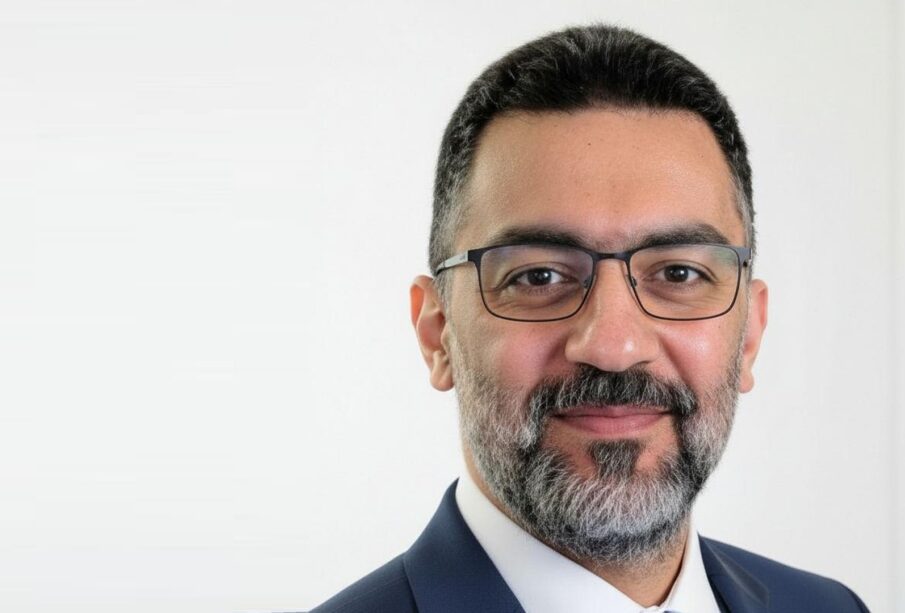
Khalid Aljamed General Manager Middle East Turkey Africa Submer
Khalid Aljamed, General Manager – Middle East, Turkey & Africa at Submer, discusses the rapid growth of AI-driven data center investments across the region, the rise of sovereign AI infrastructure, and the shift toward liquid-cooled, high-density data centers
How do you see the demand for new data centers evolving in the region? What is driving the forecasts around data center investments?
Today, with the explosion of AI, most governments view AI data centers as a critical piece of national infrastructure. That is what’s driving demand.
We’re seeing global data center expansion accelerating at nearly 30 percent year over year, and I believe this could increase to around 45 percent by next year. This growth is entirely fueled by AI expansion; how we generate, process, and consume information.
This is why we now use the term AI gigafactories. These are becoming utilities, similar to water or power. Leaders in this region are very clear about their ambitions. Saudi Arabia and the UAE aim to become global AI hubs. When you look at investments in power, land, and backbone infrastructure, it’s evident how resources are being reallocated toward AI data centers.
Traditional industries, from government and education to healthcare and cloud services, stand to benefit enormously from AI. For the past 10 to 15 years, GCC governments have also been actively diversifying revenue sources beyond oil and gas, and AI data centers are a natural fit for this region.
As AI workloads scale, could enterprises return to building their own data centers?
It’s not as simple as cloud versus on-prem. Today, we talk about AI gigafactories and tokens almost as a form of currency. Governments are now measured by how much compute and AI capacity they have, similar to how gold reserves once defined economic strength.
You need both cloud and on-prem. Cloud offers shared services, redundancy, and scalability, but sovereign requirements prevent sensitive data from being hosted outside the country or region. That’s why governments are thinking about building both AI services and their own cloud infrastructure.
How do you see the opportunity for your company in terms of data center growth in the region?
We have been operating in the data center and AI space for some time, particularly across Europe. We initially focused on crypto about 10 years ago, which led us into advanced cooling technologies.
To meet high-performance compute requirements, optimization is critical in terms of energy, space, and performance, and liquid cooling has become essential. From there, we expanded our role. Today, we see strong demand in this region for advisory services such as helping governments and enterprises understand how to build modern, sustainable AI data centers.
From advisory, we moved into boutique design, and finally into full construction and build. Our investment in the region is driven by this end-to-end capability including advisory, design, and build for AI data centers. We support governments, hyperscalers, colocation providers, telecom operators across Saudi Arabia, the UAE, Qatar, Kuwait, Africa, and Turkey, while collaborating with ecosystem partners like NVIDIA, Intel, AMD, Qualcomm, and Dell.
Are enterprises also an opportunity for you, or is the focus mainly on large government-led projects?
Governments today are focused on greenfield AI data centers, large-scale compute capacity measured in megawatts. But once momentum builds, attention will also shift to existing data centers in sectors like finance, oil and gas, and national security.
Many existing data centers were built 10 to 20 years ago based on older architectures. Scaling them for AI workloads is a different challenge, but an important one. For us, it’s a balance between greenfield development and brownfield migration.
Will existing data centers need redesigning to support AI workloads?
Exactly. Modern data centers require modularity and sustainability. Modular designs future-proof investments, allowing scalability and accommodation of new technologies. At the same time, they introduce challenges related to energy, power, land, and connectivity.
That’s why education, awareness, and experience-sharing among governments, enterprises, cloud providers, and chipset vendors are critical and we aim to sit at the center of that ecosystem.
How does liquid cooling change the game?
There are two main types of liquid cooling today. The first is direct-to-chip. Heat is transferred from CPUs, GPUs, and memory chips through a cooling plate to a liquid medium, typically an oil derivative, not water. Major oil companies like Shell, Castrol, and Valvoline are now involved in this space.
This approach has existed for years in high-performance gaming PCs, though at a much smaller scale. In data centers, the liquid exchanges heat with HVAC systems, which is essential in this region.
The second approach is immersion cooling. Entire servers are submerged in dielectric liquid. The principle is the same, heat is transferred through liquid to a heat exchanger but at rack scale.
With today’s compute loads, air cooling is no longer viable. It’s expensive and limits scalability, especially for new NVIDIA and AMD chipsets. That’s why almost all new data center designs globally now rely on liquid cooling.
Tell us about your partner strategy and regional investments, particularly in Saudi Arabia.
We’re investing across the region, with major hubs in Saudi Arabia and the UAE. We also see opportunities in North and South Africa, Turkey, and the wider GCC.
Our approach combines local resources with global expertise, enabling rapid deployments and close alignment with customers and partners. Supply chain is a major challenge today, especially for chips, memory, and storage, and no single company or government can address this alone.
We focus on building local and international ecosystems, including IT, mechanical, electrical, and plumbing partners. Traditional data centers took three years to build. AI data centers are now expected within 9 to 12 months, which requires strong partner ecosystems.
Do you already have customers and deployments in the region?
We work with sovereign funds and local governments. One of our largest public case studies is ADQ02, a 400-megawatt deployment. It’s a strong example of how Abu Dhabi leveraged excess power sustainably to generate new revenue streams through digitization, crypto, and data mining.
How does crypto feature in your regional strategy today?
Crypto remains relevant, but in many countries, it’s not legally recognized as an industry. The UAE is an exception. From a government perspective, the focus has clearly shifted to AI and AI-related investments.
Given crypto’s volatility, much of the industry today prioritizes AI data centers. Crypto hasn’t disappeared, but it has taken a backseat to AI.

Leave a reply