
Sovereign AI beyond data residency
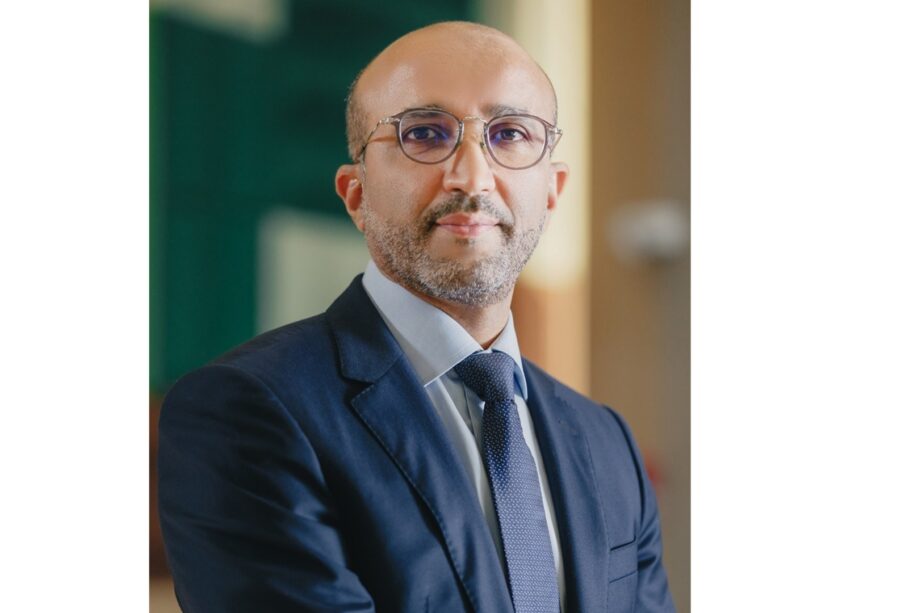
Mohammed Retmi, Vice President - Sovereign Cloud, Core42
Mohammed Retmi, Vice President – Sovereign Cloud at Core42, discusses why sovereign AI requires control over data, infrastructure, models and operations, and how organisations can balance AI adoption with security, governance and resilience as they move towards production-scale deployments.
What does sovereign AI mean in practice beyond simply ensuring that data is hosted within national borders?
Sovereign AI is about control. It is the ability to set your own risk tolerance for data and AI, and to keep that control during normal operations, disruption and recovery.
Knowing where data is hosted is only one part of that. Organizations also need to know who can operate the environment, which jurisdiction governs it, which models touch the data, and whether critical services can keep running if circumstances change.
This is why sovereignty now extends beyond data residency. It has three dimensions – data sovereignty, operational sovereignty and technological sovereignty. Data sovereignty means data remains resident in the UAE and subject to UAE laws, regulations and the customer’s own policies. Operational sovereignty means governance, oversight, monitoring and administration are exercised through locally governed operating models, with transparency and accountability built in. Technological sovereignty means organizations retain resilience, control, visibility, portability and operational independence over their critical systems and workloads.
As AI adoption grows, that control extends to models, compute and inference as well. When a prompt is processed, organizations need to know where inference runs, who can see the inputs and outputs, and whether they can change models if their needs change. Model choice is part of sovereignty too.
How should organizations determine which workloads can run in public cloud and which require more restricted, private or even air-gapped environments? How is Core42 helping organizations address this with your solutions focus?
Placement starts with classification. The UAE National Cloud Security Policy sets differentiated requirements based on data classification and workload sensitivity. That classification belongs to the customer, and it is the right first filter for every placement decision.
Our portfolio follows the same logic. Open, confidential and restricted workloads can run on Core42 Sovereign Enabled Public Cloud. It combines a hyperscale Microsoft Azure foundation deployed in the UAE with an independent Core42 governance layer and is designed with reference to the policy’s Partial Sovereign Cloud requirements. For workloads that require higher levels of sovereignty assurance, isolation or operational independence, in line with the policy’s Sovereign Cloud requirements, Core42 Signature Private Cloud, powered by Red Hat, offers connected, restricted and fully air-gapped deployment options. Organizations can match each workload to the right environment rather than relying on a single architecture for every use case. Final suitability always depends on the classification, the applicable requirements and the verified controls.
Classification is then tested against practical questions. Does the workload need access to global AI services? What latency and compute does it demand? How must it behave if external connectivity is lost? The answers often split one application across environments, with sensitive processing kept private and less sensitive services running on public cloud.
This model already runs on a national scale. With the Abu Dhabi Department of Government Enablement and Microsoft, Core42 Sovereign Enabled Public Cloud now supports more than 47 government entities and more than 11 million daily digital interactions. For organizations that need in-country AI compute without building their own, we launched Sovereign AI Compute with e& UAE. It provides enterprises and government entities with on-demand GPU infrastructure on a consumption basis, without upfront capital investment or data egress fees. Getting placement right early is what lets regulated organizations move faster with AI.
As enterprises deploy generative and Agentic AI, what new security risks emerge around models, data, APIs and autonomous workflows, and how should security be built into the AI lifecycle from development through production?
Agents turn AI from something that answers into something that acts. This shift creates new risk across the stack. Models can be tampered with or sourced from supply chains nobody has verified. Data can leak through prompts and retrieval pipelines that reach more than they should, or through outputs that expose sensitive information. APIs have become a new and heavily used attack surface. And autonomous workflows raise a question traditional security was never built to answer – what an agent is allowed to do, on whose authority, and who is accountable when it acts.
Security therefore has to follow the lifecycle. In development, that means verified models, classified training and fine-tuning data, and adversarial testing before release. In deployment, every agent needs its own identity and least privilege access, with controls at the API layer backed by encryption, customer-managed keys and confidential computing where appropriate. In production, controls must be enforced, monitored and audited continuously, with human approval for high-impact actions.
Some of these advanced protection mechanisms are being built in the UAE. Our collaboration with the Technology Innovation Institute, announced at GISEC this year, explores UAE-developed capabilities such as confidential computing and encrypted AI inferencing for Core42 Sovereign Enabled Public Cloud and Core42 Compass, our managed platform for generative and agentic AI. This helps local research to feed directly into the security of sovereign environments.
Governance also has to match autonomy. Gartner advises classifying agents by autonomy level and predicts that by 2027, 40% of enterprises will demote or decommission autonomous AI agents because of governance gaps found only after production incidents. That is what happens when governance is sequenced after deployment.
How well prepared are organizations in the Middle East to understand where sensitive data resides, how it is classified and governed, and what information AI models and agents are permitted to access?
Most organizations know where their data is stored. Far fewer know how much their AI can reach.
Readiness is uneven. Government entities and regulated sectors such as banking have invested heavily in classification and governance because regulation requires it. Many others are still mapping data spread across systems built over different decades, by different vendors, to different standards. That groundwork is routinely underestimated, and it decides whether AI can be deployed safely at all.
Governance practice has further to go. Research from the Dubai Future Foundation and the IBM Institute for Business Value found that only 13% of UAE organizations apply comprehensive AI governance frameworks across all their AI initiatives.
Agents raise the stakes. A person opening a record is a familiar control problem. An agent retrieving, combining and acting on thousands of records at machine speed is a new one. Access policies written for people now need to be written for agents, and they must cover the AI tools employees use outside approved environments as well.
Classification remains the customer’s decision. Our role is to make the controls that follow it visible and enforceable. Our partnership with Data Dynamics, integrated with Core42 Insight on Sovereign Enabled Public Cloud, gives UAE organizations classification, governance and remediation built into the operating layer so data can be used with confidence. Core42 Insight then maps regulatory requirements to more than 1,000 technical controls across 22 compliance frameworks and flags resources that drift outside an organization’s chosen policies, with recommendations on how to fix them.
You cannot govern what an agent sees until you know what there is to see.
The UAE is moving towards AI-native government and increasingly AI-enabled critical infrastructure. Does this create a need to think about the resilience of AI infrastructure itself as part of national cybersecurity and digital continuity?
Yes. Once AI runs public services, its infrastructure is national infrastructure, and Abu Dhabi’s goal of becoming the world’s first fully AI-native government by 2027 makes the continuity of AI a question of national continuity.
It helps to keep three ideas distinct. Sovereignty is control: who governs the environment and under which jurisdiction. Security is protection: keeping that environment safe from attack and misuse. Resilience is continuity: keeping services running through disruption and recovering when something fails. An AI-native government needs all three, and each needs its own engineering.
Resilience itself works across several layers, because each fail in a different way. Within the G42 Intelligence Grid, Khazna owns the data center layer, where power, cooling and footprint are decided. At the platform layer, Signature Private Cloud runs on three availability zones interconnected over G42-owned private dark fiber, keeping that traffic off the public internet. For recovery, we offer Signature National Disaster Recovery Cloud. The principle that matters is that backups and replicas need to remain within the same sovereign boundary as the data they protect, and recovery plans need regular testing.
Supply chain resilience matters just as much. IBM’s research found that 88% of surveyed UAE executives say switching their primary AI vendor or model would be difficult today. Core42 AI Cloud is built on a diversity of silicon, running NVIDIA, AMD, Qualcomm and Cerebras accelerators on one platform, reducing dependence on any single chip provider.
Recovery has to be planned before the first critical service goes live. By the time an outage starts, it is too late to design it.
From your engagements with government and enterprise customers, what are the biggest priorities you are seeing around sovereign AI and secure cloud adoption in the UAE and wider Middle East, and how do you expect these requirements to evolve over the next two to three years?
Customers have moved on to the practical questions of running AI.
Four priorities come up in almost every conversation. The first is moving AI out of pilots and into production on governed infrastructure, because AI only creates value once it runs reliably at scale.
The second is matching assurance to sensitivity, with AI capability now expected at the highest classification levels, which is the purpose of our agreement with the UAE Cyber Security Council to advance Signature Sovereign AI Cloud for secret and top-secret cloud and AI workloads.
The third is evidence. Boards and regulators want to see controls working day to day. The sovereign enabled financial cloud we developed with Central Bank of the UAE builds governance and real-time oversight into the financial sector’s infrastructure, and Qadi runs its regulatory compliance platform on Core42 Sovereign Enabled Public Cloud, governed through Core42 Insight.
The fourth is choice. Customers want in-country solutions from a wider ecosystem, which is why we launched the Core42 Partner Program, which brings more than 50 ISVs, technology partners, and resellers onto Sovereign Enabled Public Cloud, so customers can choose from a broader range of in-country solutions.
Demand is accelerating. More than 100 public and private sector organizations already run on Core42’s shared infrastructure, and Gartner projects the Middle East and Africa to record the fastest regional growth in sovereign cloud spending in 2026, with governments being the main buyers, followed by regulated industries and critical infrastructure operators.
Over the next two to three years, control over models and inference will become a standard procurement requirement. Agent governance will move from internal policy into regulation. And organizations operating across borders will expect sovereign controls that travel with their workloads.
The next decade of AI will separate organizations that built on resilient, durable foundations from those that scaled quickly on fragile ones.




Leave a reply